The 359 Run Shock: How South Africa’s Big Chase Stunned India and Leveled the ODI Series
When India’s innings ended in Raipur, the mood was confident. Ruturaj Gaikwad and Virat Kohli had led the team to a massive 358 for 5 in the 2nd ODI. Everyone thought 359 was a winning score, especially on a pitch that looked tough for batters.
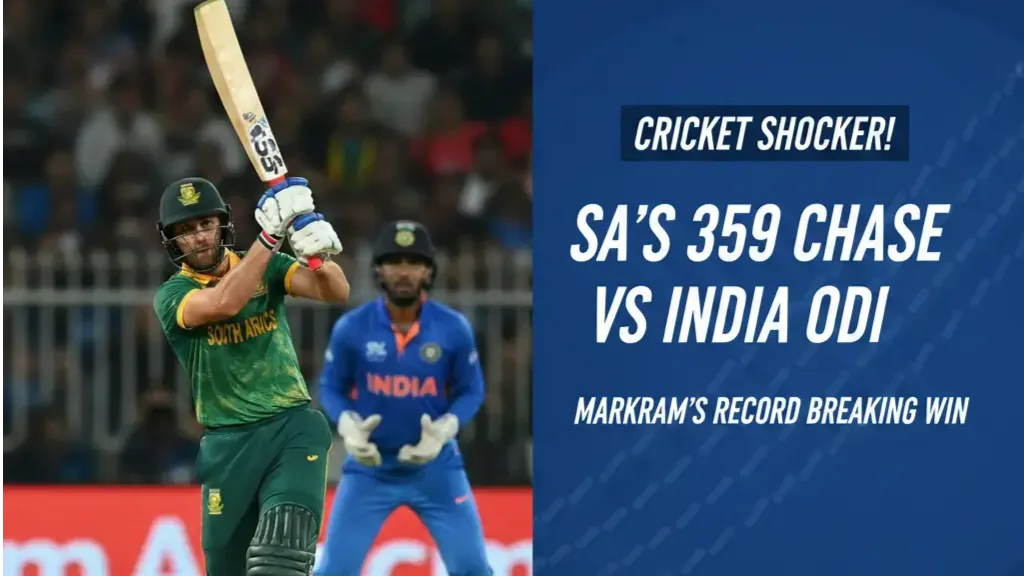
But South Africa didn’t just chase it down—they smashed it. In a thrilling show of modern power-hitting, Aiden Markram and his team pulled off a historic chase. They won the match by four wickets, making the series wide open at 1-1.
This was more than just a victory. It was a perfect display of planning and individual brilliance. The result has shocked fans and experts alike. The big question is: How did South Africa manage their highest successful ODI chase against India, and that too in Indian conditions?
This detailed analysis will look at the exact moments the game changed. We will study the Indian decisions that went wrong and celebrate the amazing performances that created this dramatic result. You will learn the difference between scoring a huge total and actually protecting it. This match showed why attacking non-stop in the middle overs is the new rule for success in chases.
India’s Strong Start: Two Big Hundreds
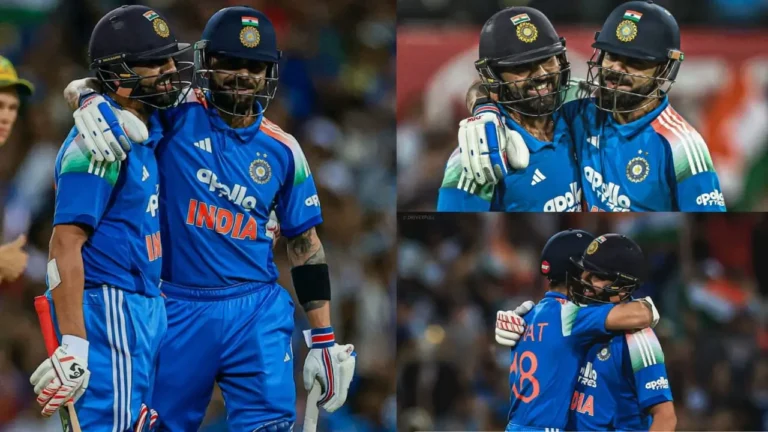
India’s first innings was built on two brilliant centuries. Ruturaj Gaikwad was excellent, turning a good start into his first ODI hundred (105 runs off 83 balls). He held the innings together and punished the bad balls. The master chaser, Virat Kohli, supported him perfectly, scoring his 53rd ODI century (102 runs off 93 balls).
The most important part of India’s innings was the 195-run partnership for the third wicket. This was a massive 195-run partnership for the third wicket that completely changed the innings.
- Key Tactic: The partners didn’t just hit boundaries; they kept rotating the strike brilliantly. This meant the South African bowlers were constantly under pressure, bowling to two settled, century-making batsmen.
- The Finish: Captain KL Rahul provided the final, powerful boost with an unbeaten 66 off just 43 balls. This strong finish pushed India past the 350-mark to 358/5, suggesting they were dominant.
The Historic Chase: South Africa’s Bold Plan
To chase 359, a total higher than South Africa had ever chased against India, they needed courage and a clear understanding of the pitch changing in the second half.
Aiden Markram: The Chase Hero
The success of the South African chase rested on the shoulders of Aiden Markram. He was attacking right from the first ball, making sure the required run rate stayed under control. His innings of 110 runs was a perfect display of power and smart risk-taking.
Markram’s masterstroke was attacking India’s spinners. He knew the heavy dew would make it hard for them to grip the wet ball. He hit hard and early, launching 10 fours and 4 sixes. Crucially, he kept a high tempo in the middle overs, which stopped India from getting a grip on the game.
Markram also had a lucky break. Every big chase needs one. When he was on a crucial 53 runs, Indian fielder Yashasvi Jaiswal dropped a catch off Kuldeep Yadav’s bowling. This was arguably the biggest turning point. Markram stayed to score 57 more critical runs before getting out.
Big Support from the Middle Order
To chase 359, almost every batter has to contribute, and South Africa’s middle order stepped up hugely.
| Batsman | Score | Balls Faced | Strike Rate | Role in the Chase |
| Matthew Breetzke | 68 | 65 | 104.61 | Solid partnership with Markram, kept the score moving well. |
| Dewald Brevis | 54 | 34 | 158.82 | Smashed the Indian spinners during the middle overs to keep the pressure high. |
| Corbin Bosch | 29* | 15 | 193.33 | Clinical and quick finishing power to cross the line. |
The quick 92-run partnership between Brevis and Breetzke in only 63 balls was the true engine of the chase. Brevis’s aggressive hitting ensured that the momentum did not stop even after Markram got out.
💔 India’s Mistakes: Dew and Poor Bowling
South Africa’s batting was incredible, but India’s bowling attack and their captaincy decisions faced major criticism.
The Problem of Dew
The Raipur stadium is known for heavy dew in night matches, and this was a huge problem that India could not solve.
Spinners Kuldeep Yadav (1/78) and Washington Sundar (0/49 from 6 overs) could not grip the wet ball. They lost control over their line and length. The pitch actually helped the batsmen rather than the spin, completely neutralizing India’s key attack weapon in the middle overs.
The fast bowlers, especially Prasidh Krishna (2/85), gave away too many runs. They bowled short and loose, and could not land their yorkers in the death overs. When you are defending a giant score, a high economy rate is an open invitation for the opposition to take over. India’s pacers failed to change their plan for the flat, wet conditions.
Captaincy Under Pressure
KL Rahul, despite his great batting, will likely regret some of the bowling changes and field settings he chose in the crucial middle overs.
The team could not create a period of sustained pressure, which usually means taking wickets or bowling a lot of dot balls. This allowed the South African batters to find an easy pace. Once Markram and Brevis hit the accelerator, the huge target felt much smaller and manageable.
📊 The Numbers Tell the Story
This defeat is highly unusual. It is only the second time in history that India has lost an ODI after scoring 350 runs or more. This fact alone shows how important and rare South Africa’s effort was.
| Key Statistic | India (1st Innings) | South Africa (2nd Innings) |
| Highest Partnership | 195 (Gaikwad & Kohli) | 101 (Markram & Bavuma) |
| Run Rate | 7.16 RPO | 7.37 RPO |
| Boundaries (4s/6s) | 35 / 7 | 37 / 6 |
| Dot Ball % (Approx.) | 41% | 38% |
The numbers clearly show that South Africa didn’t just keep up with India’s scoring—they were slightly faster throughout the match. This proves their aggressive, boundary-focused strategy worked perfectly. They also played fewer dot balls, ensuring constant pressure on the Indian bowlers at all times.
The Final Lesson: What This Chase Taught Us
South Africa’s four-wicket win was about bravery, accuracy, and strong self-belief. It showed the perfect way to chase in modern cricket: get ahead of the required rate early, attack smartly in the middle overs, and then let the expert finishers complete the job.
For India, this loss is a major wake-up call. The batting looks world-class, but the bowling quality, especially under pressure from dew and against a great batting side, needs serious improvement. India must quickly find a way to take wickets and control the flow of runs in the middle overs, no matter what the conditions are.
The stage is now perfectly set for the final, deciding match in Visakhapatnam. The big question is: Will India change their bowling tactics, or will South Africa continue their chasing dominance?
❓ Frequently Asked Questions
Q1: Who was the best player in the 2nd ODI between India and South Africa?
A: Aiden Markram was named the Player of the Match for his outstanding, series-leveling century of 110 runs.
Q2: Was the 359-run chase a record for South Africa?
A: Yes, the successful chase of 359 runs is one of South Africa’s highest-ever successful run chases in ODI history, and their biggest-ever against India.
Q3: How did India lose even though two players scored centuries?
A: Both Ruturaj Gaikwad (105) and Virat Kohli (102) scored hundreds for India, but the team still lost. This clearly shows the difficulty Indian bowlers faced and how brilliantly the South African team chased the total.
Q4: Why couldn’t India successfully defend their total?
A: While the South African batting was amazing, India struggled because of the heavy dew. The wet ball made it impossible for their spinners to bowl accurately, which led to a loss of control and an inability to take wickets in the crucial middle overs.
Conclusion and Next Steps
The 2nd ODI proved that no total is completely safe in today’s cricket if a team is committed to attacking the chase. The series is now perfectly balanced and heading for a thrilling finale.